
A simple breakdown of the delays, the players involved, and what it means for the economy.
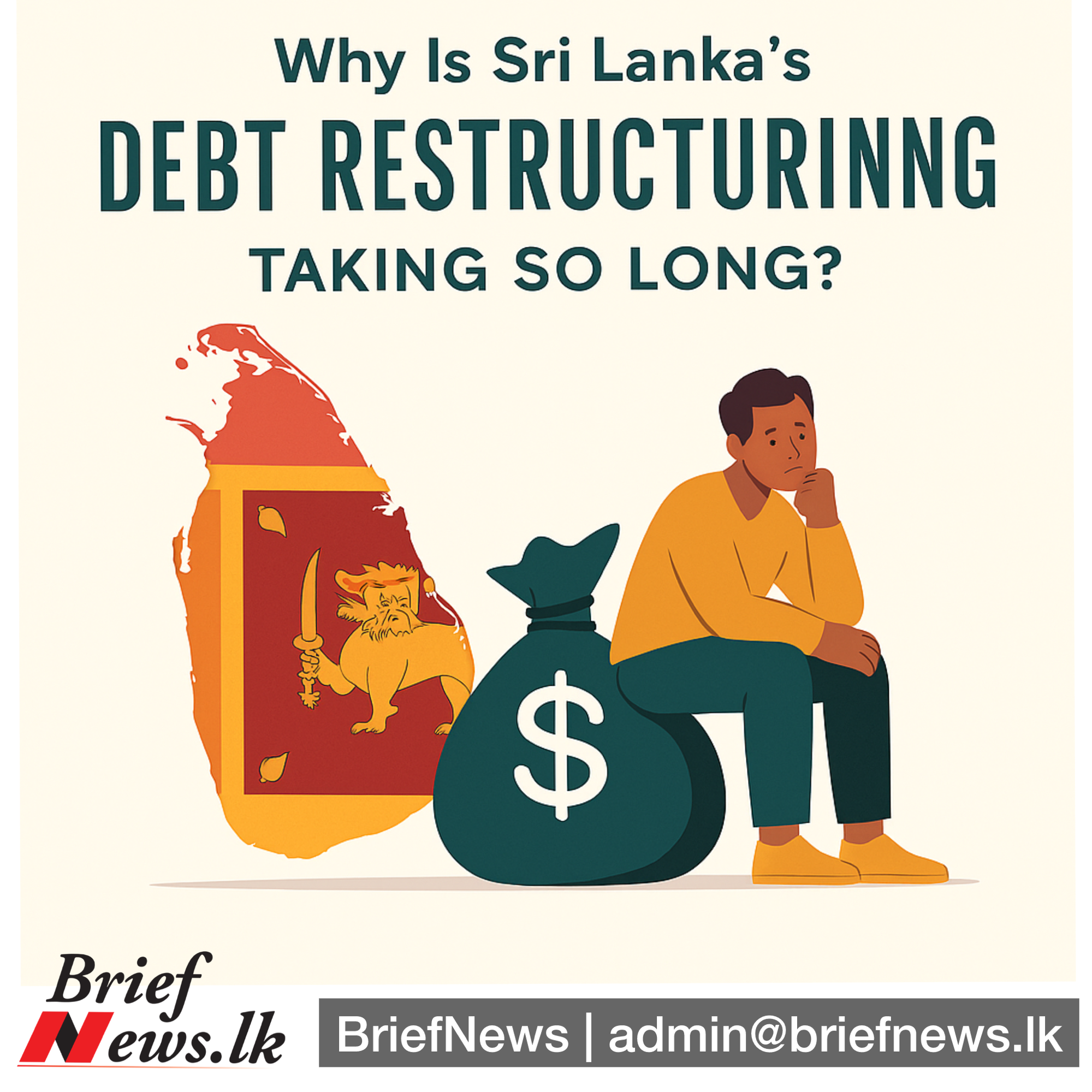
Sri Lanka’s debt restructuring process has become a marathon rather than a sprint. Here’s why:
Who’s Involved?
The government is negotiating with multiple creditors—China, India, Japan, and private bondholders. Each has different terms and expectations.
What’s the Hold-Up?
Disagreements over interest rates, repayment timelines, and transparency have slowed progress. China’s stance on bilateral debt terms is a key sticking point.
Why It Matters to You?
Until restructuring is complete, Sri Lanka can’t access the full IMF bailout package. That means slower recovery, fewer subsidies, and continued inflation pressure.
What’s Next?
Talks are ongoing, but experts say a deal may not be finalized until early 2026. Meanwhile, the government is pushing for interim relief measures.
Quick Facts:
🇱🇰 Sri Lanka owes over $50 billion in external debt
🏦 IMF approved a $3 billion bailout in 2023
📉 Inflation peaked at 70% in mid-2022